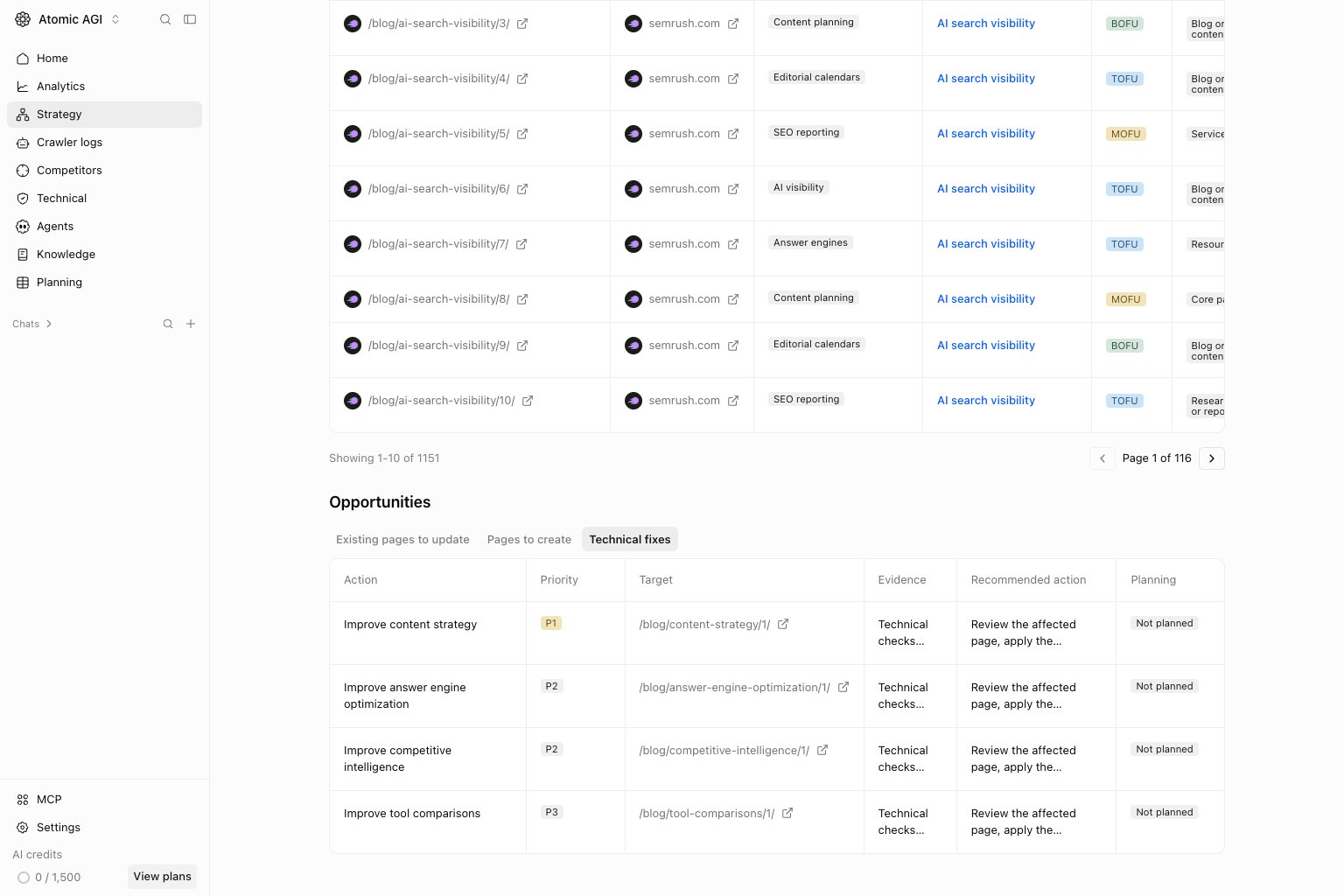

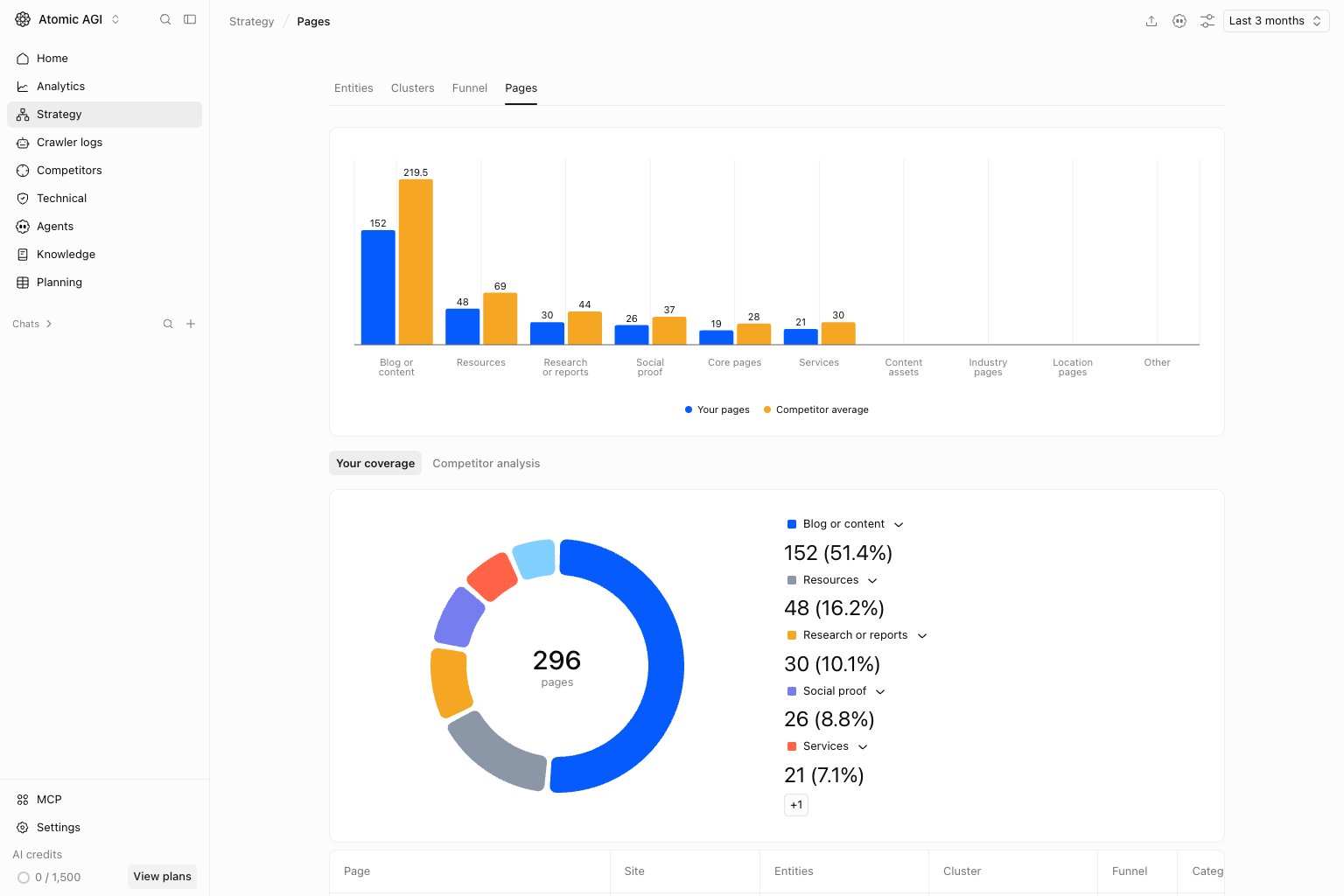
Understand the labels
Strategy evidence and coverage explains Covered, Weak, Missing, and Unclassified. Coverage describes content and its validation; Performance describes measured activity, Trend compares periods, and Planning describes linked work. A weak measurement is not automatically a missing page. Open the row’s reason and supporting pages before creating a task. Check the source counts when competitor evidence is incomplete.Review the scope and readiness
Check the selected sites, date range, and filters. Wait for source synchronization and classification before treating incomplete coverage as a confirmed gap. Review source pages when a label or opportunity is surprising.Read page classifications and evidence
Page category is the broad role, such as Resources or Services. Page subtype is the more specific format, such as a guide, tutorial, or comparison. Cluster identifies its topic group, Entity identifies subjects, and Funnel identifies buying-journey purpose. Category and subtype are not ranking scores. URL match describes whether available performance can be connected to the inventory page. A missing match or a dash is unavailable evidence, not zero clicks. Matched means the page has a performance match; Unmatched means no match was found; Ambiguous means more than one possible association needs review. Not applicable and Unavailable describe a measurement that does not apply or cannot be supplied, respectively. Confidence expresses certainty in an assessment, not the chance of ranking or converting. Review low-confidence labels against the actual page. For an opportunity, read the target, evidence, recommendation, priority reason, and dependencies together. A technical dependency may need attention before a new content brief. Planning status helps you find work already assigned.Your coverage tab
Use Your coverage to understand your existing content and performance. Inspect the page classification, performance, and supporting evidence. Decide whether to improve an existing page or create a distinct page with a different purpose.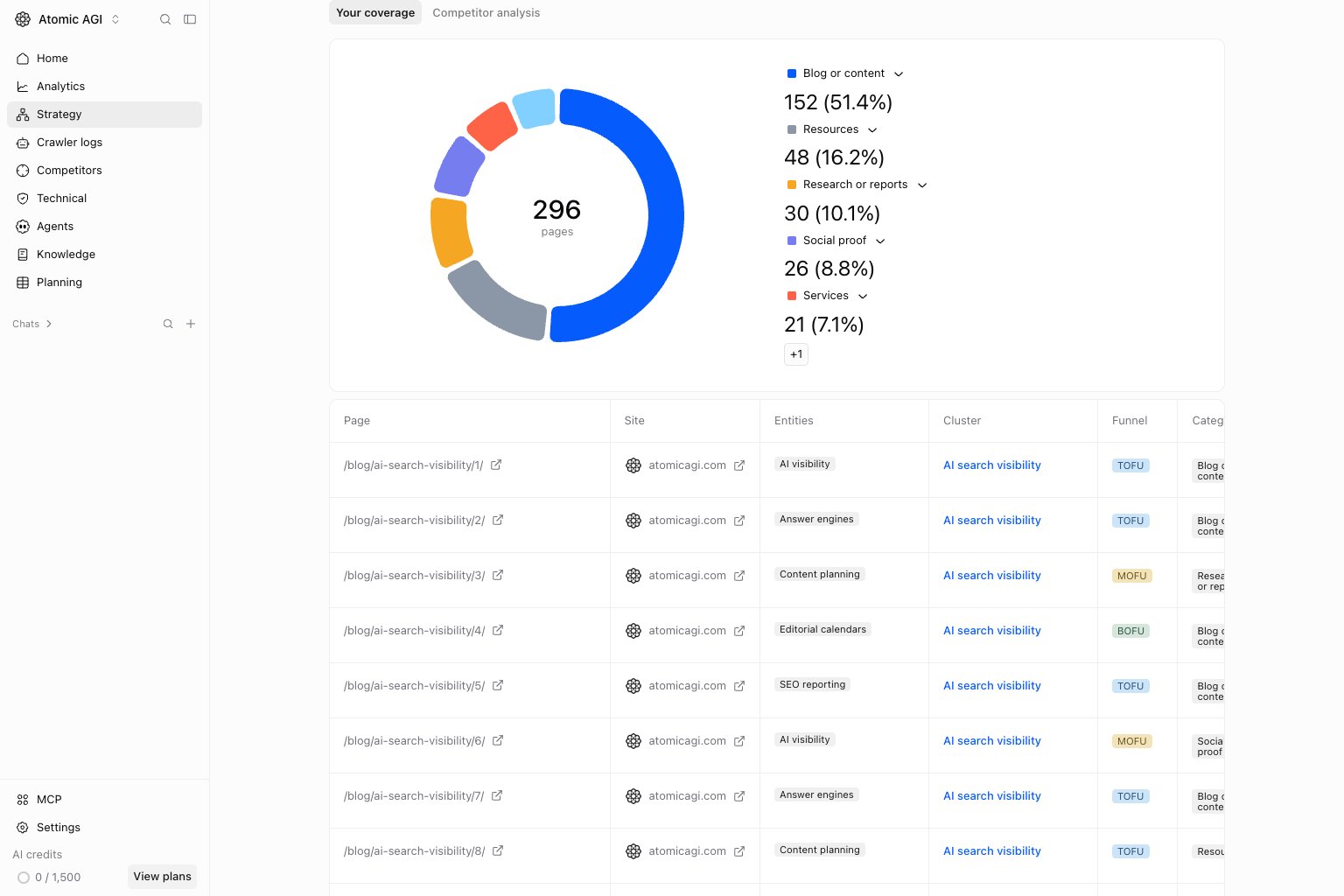
Competitor analysis tab
Compare the same scope across sites. Page counts and coverage show what is present, not whether the content is accurate or commercially useful. Open competitor examples to understand the underlying evidence before choosing an action.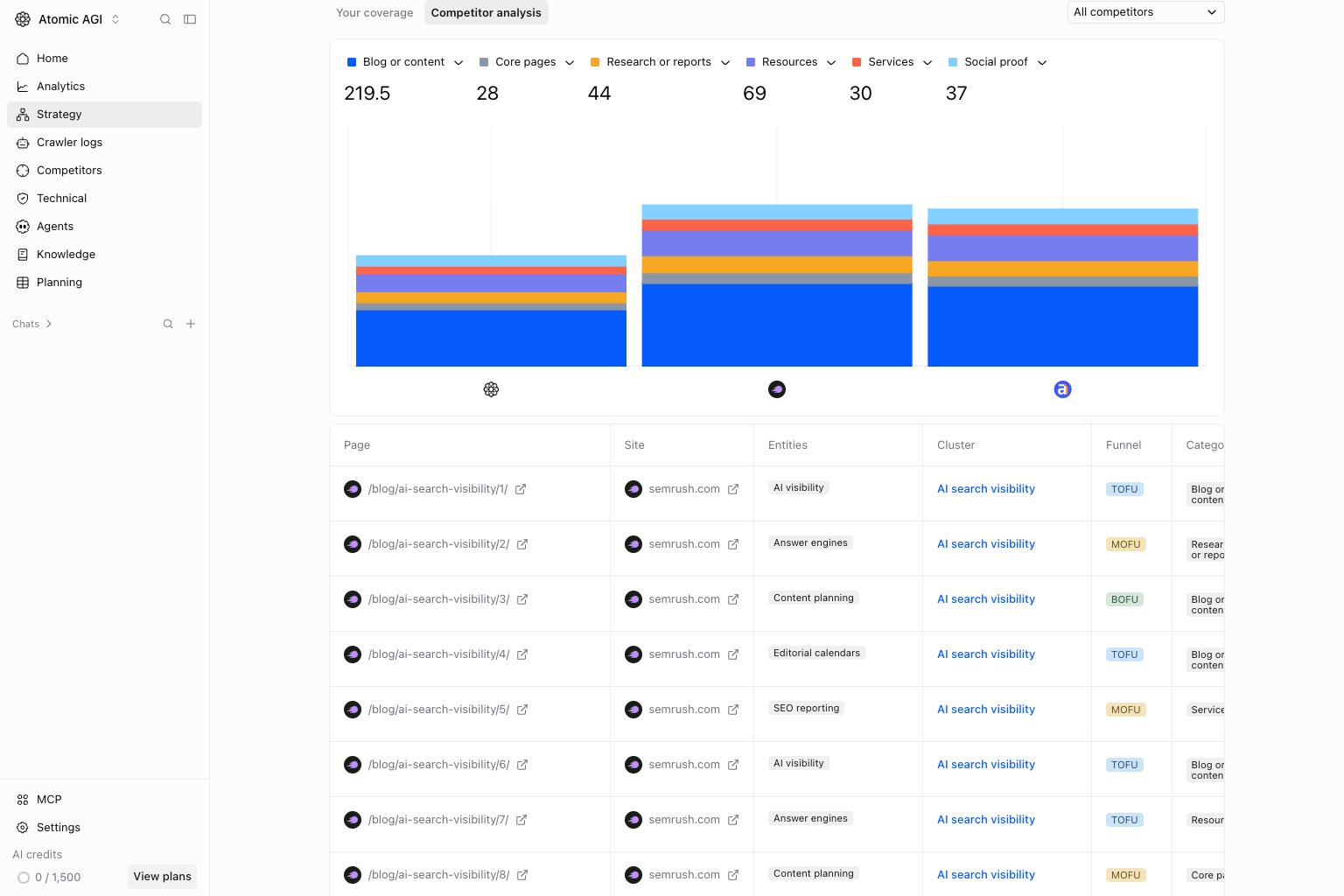
Review opportunities
Where opportunities are shown, compare competitor gaps with weak performance on existing pages. Read the reason, affected page, and evidence. An unavailable source or incomplete classification should be resolved before producing a brief. Use planning status to avoid creating duplicate work.Existing pages to update tab
Improve a page that already covers the intended topic. Open its evidence and performance before changing the brief.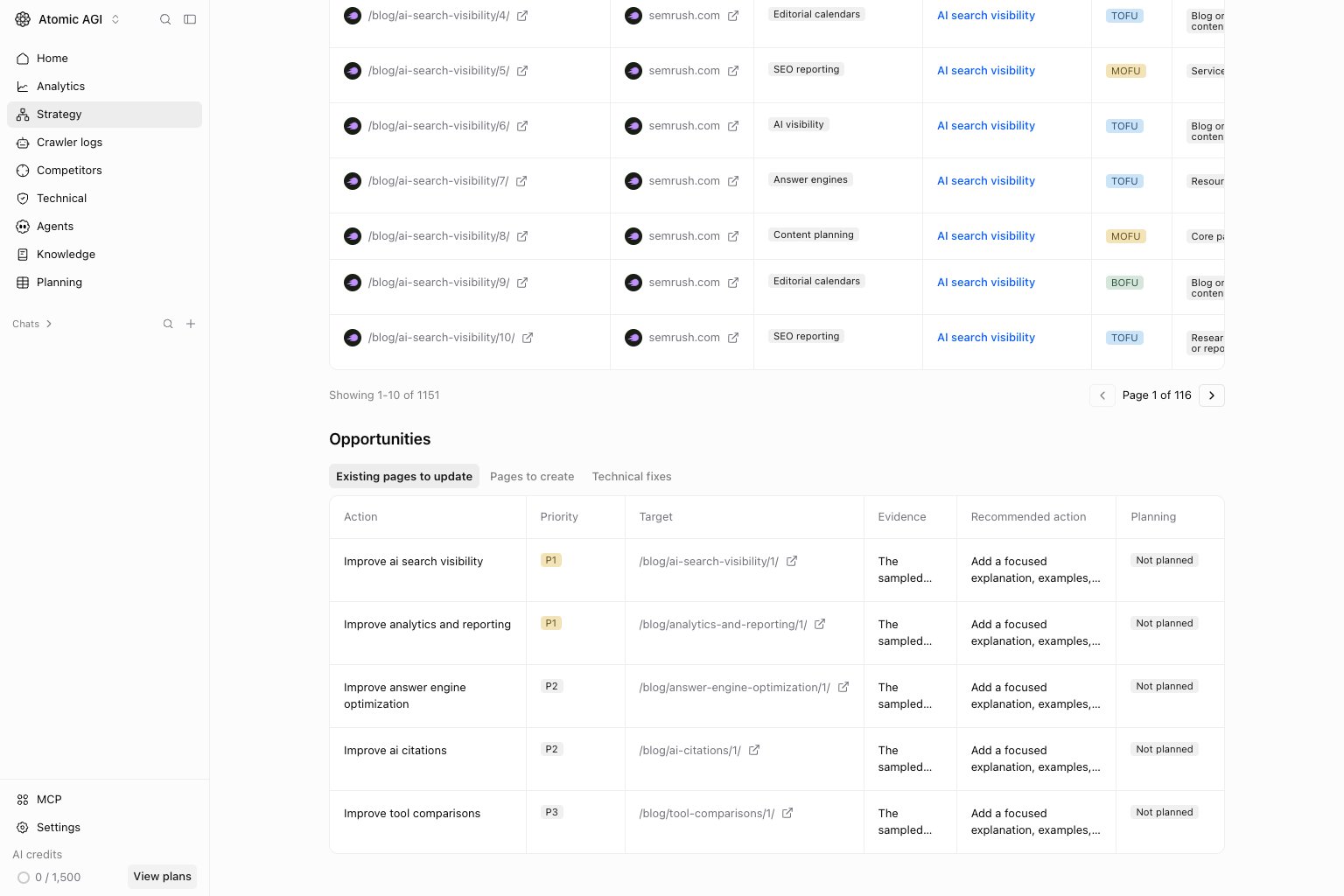
Pages to create tab
Review uncovered needs and supporting competitor examples. Check for an existing page with the same intent before creating another.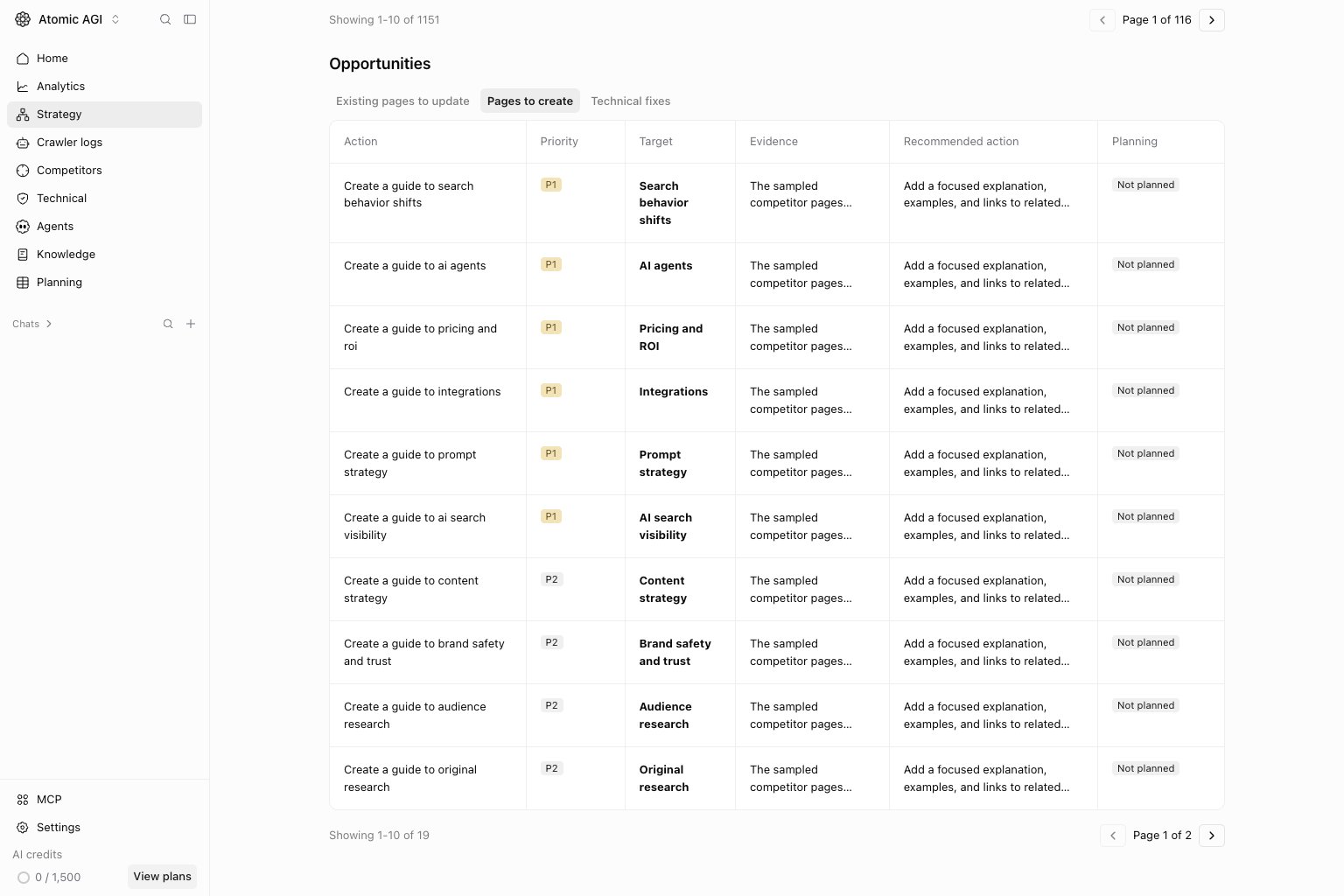
Technical fixes tab
Review crawl, indexing, and other technical dependencies before investing in new content.