

Questions this page should answer
- Which list should become rows?
- Which fields should become columns?
- Which rows need review, cleanup, or follow-up?
Before you create a grid
- Start with one clear list of inputs.
- Decide what the
Titlecolumn should represent. - Add only the columns you need for the next decision.
- Use separate sheets when two lists need different structure.
What this page gives you
- Project-level Grid workspaces.
- Sheets inside each Grid.
- Five starter rows and one starter
Titlecolumn. - Text, number, date, content, JSON, URL, image URL, and workflow columns.
- Inline cell editing.
- Sheet tools for creating, importing, reordering, renaming, duplicating, and deleting sheets.
- Row tools for selecting, deleting, and dragging rows into a new order.
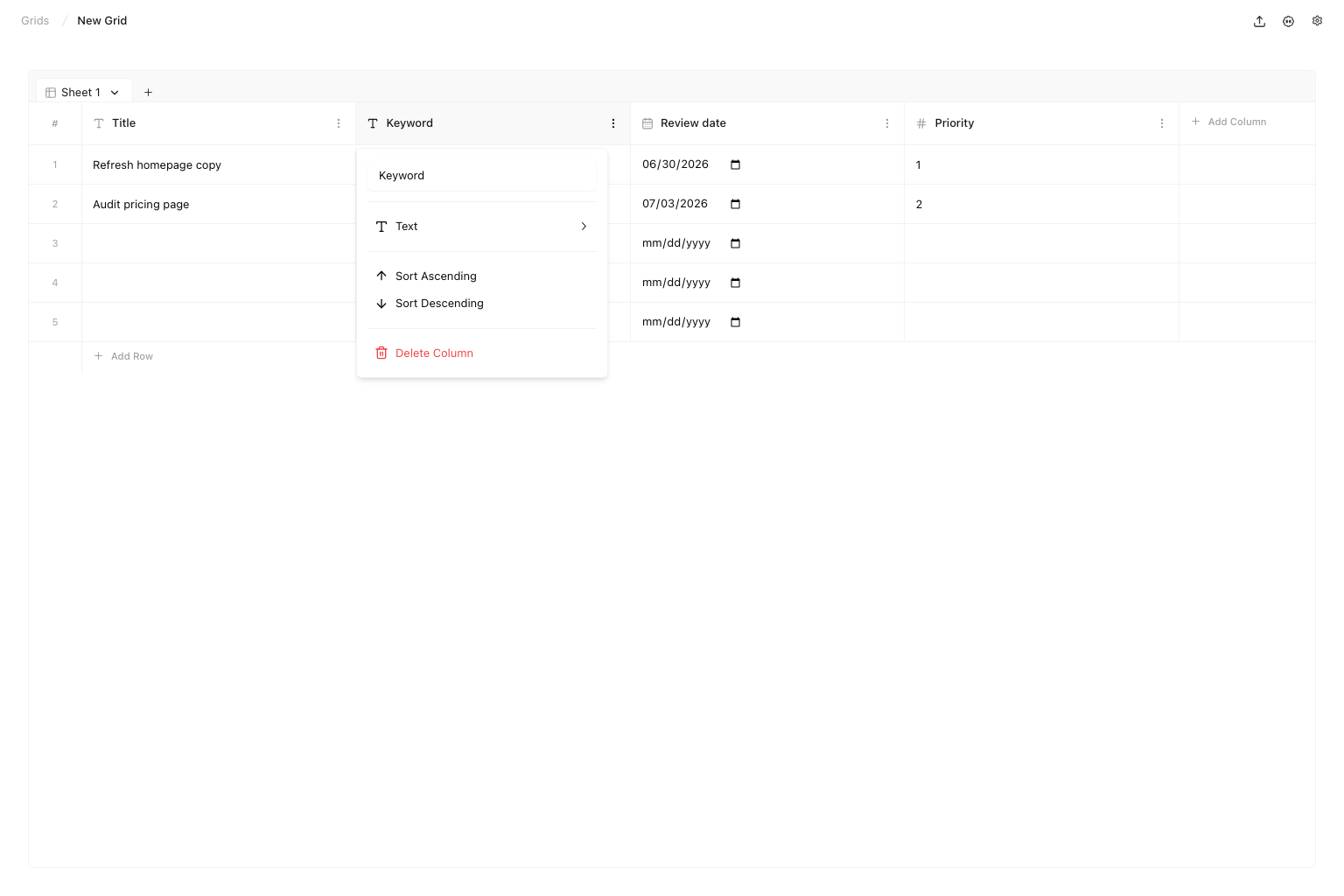
- Column tools for inserting, renaming, changing type, sorting, and deleting columns.
- CSV export for the active sheet.
Create a grid
OpenAutomation > Grids, then use New Grid.
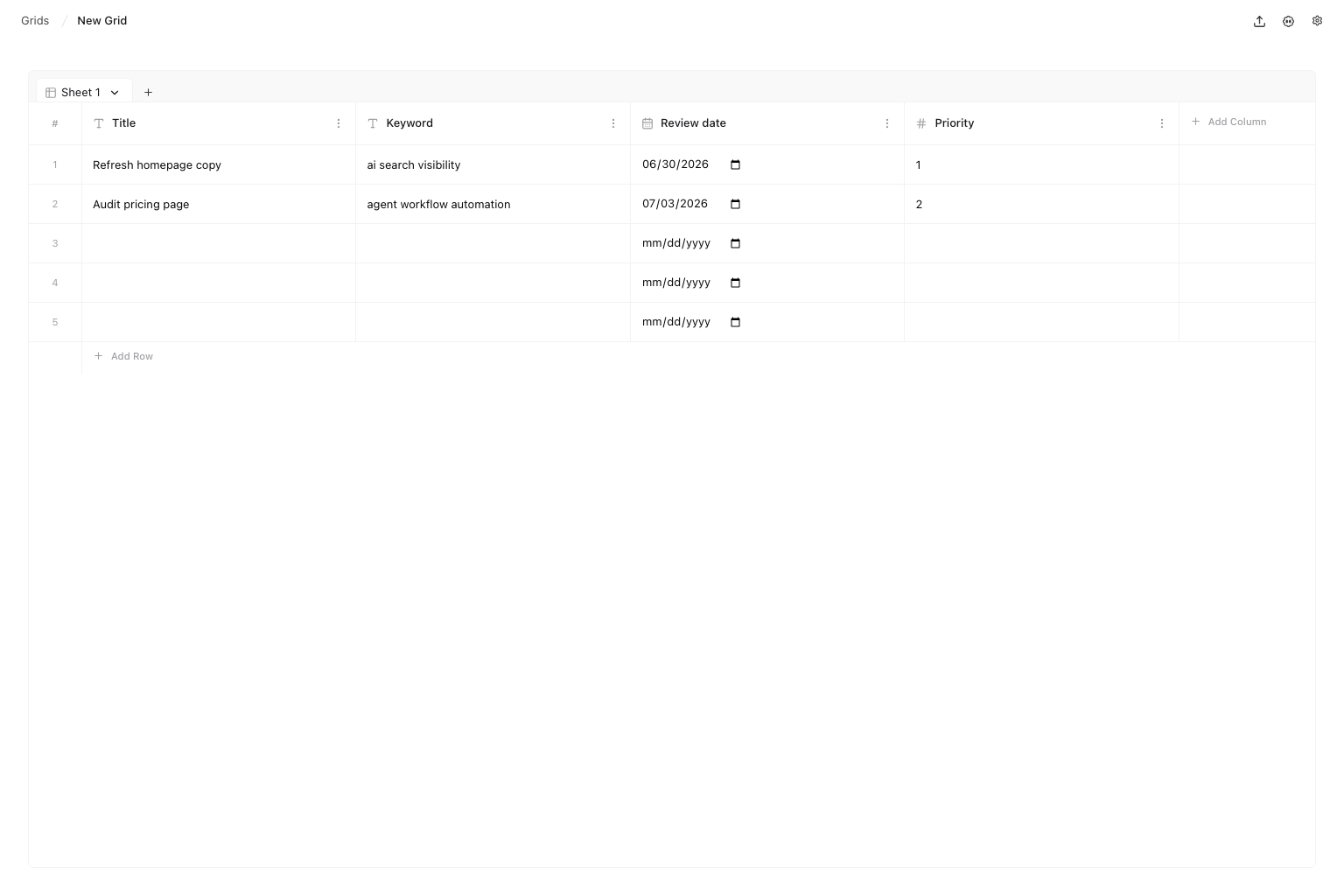
Each new Grid starts with one sheet named Sheet 1, one Title column, and five empty rows.
Use the in-table Add Column header and Add Row row to expand the active sheet.
Manage sheets
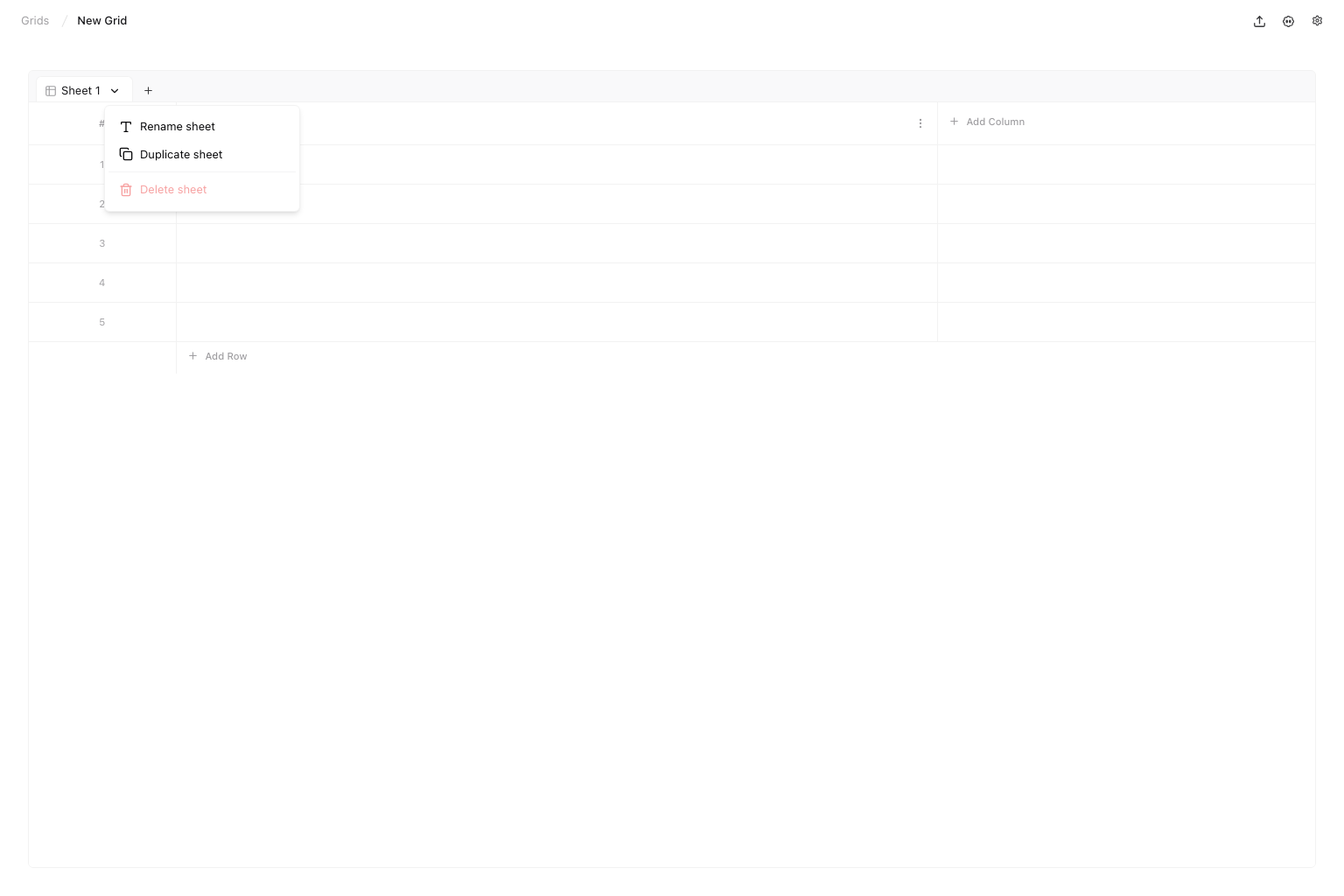
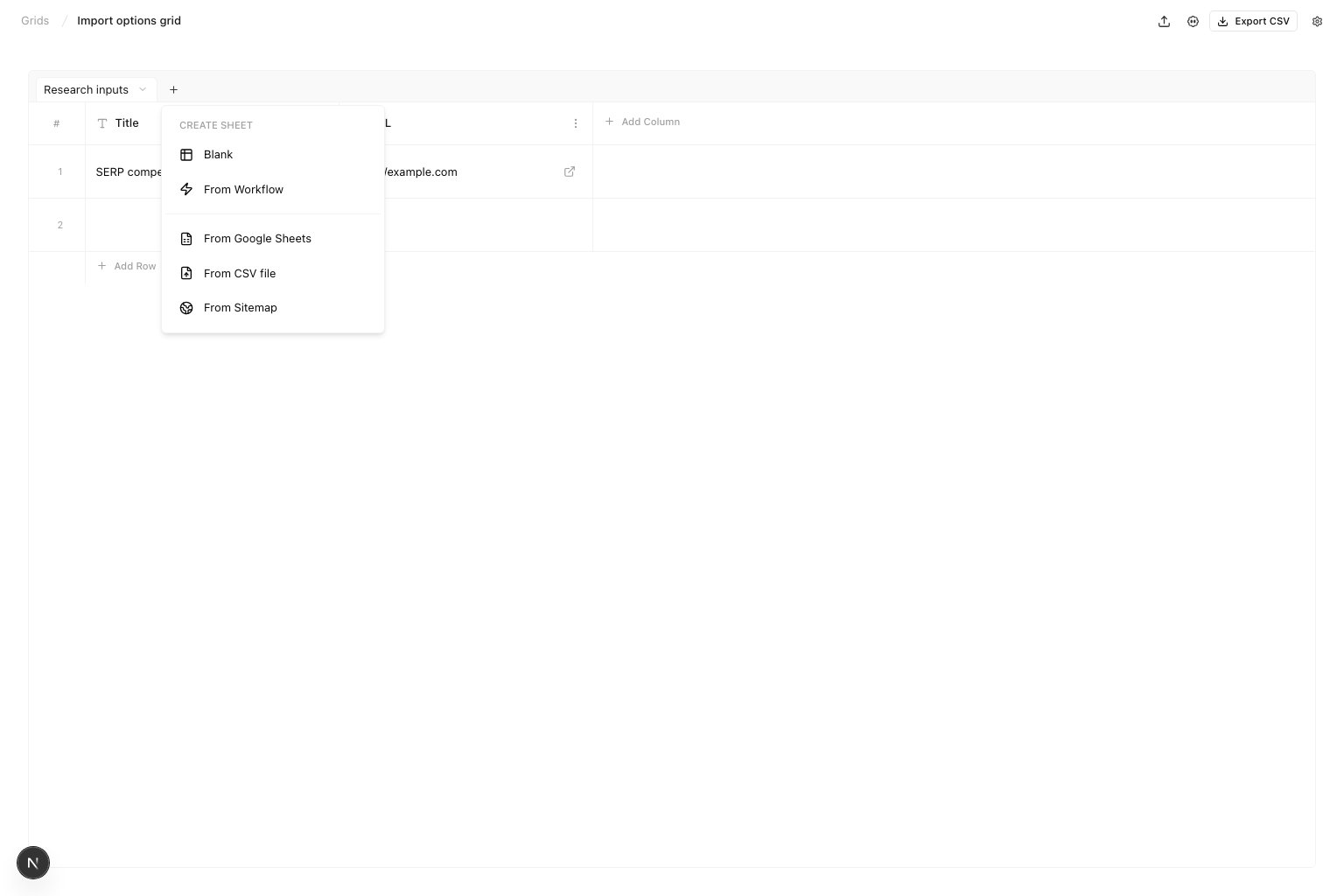
+ in the tab strip to add another sheet. You can start with a blank sheet, import a public Google Sheet, import a CSV file, import URLs from a sitemap, or create a sheet from a workflow.
Add columns
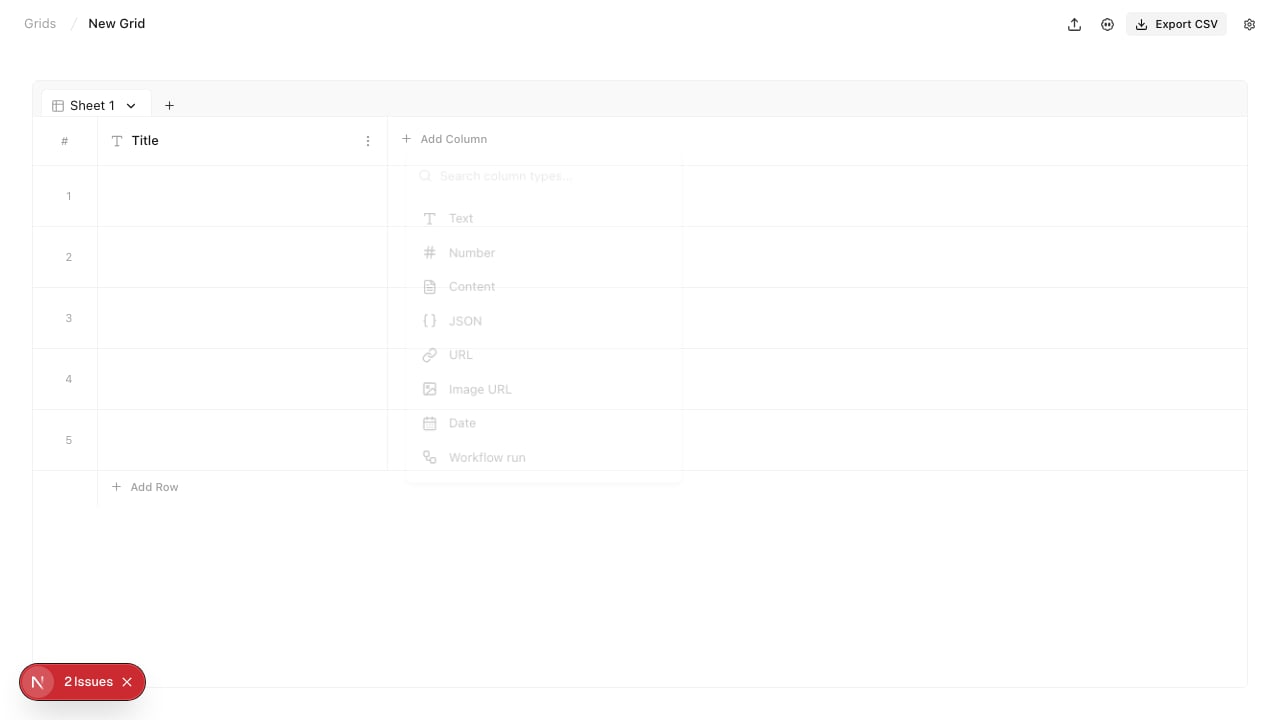
Add Column for row data such as:
- Text
- Number
- Date
- Content
- JSON
- URL
- Image URL
Content for longer writing. It opens in a full-screen editor. Use JSON for structured values. Invalid JSON stays editable until you fix it. Use URL for links. Valid links show an open-in-new-tab action. Invalid links show a warning. Use Image URL when the cell should show an image preview from a URL.
Use Workflow run when each row should run the same workflow with row-specific inputs.
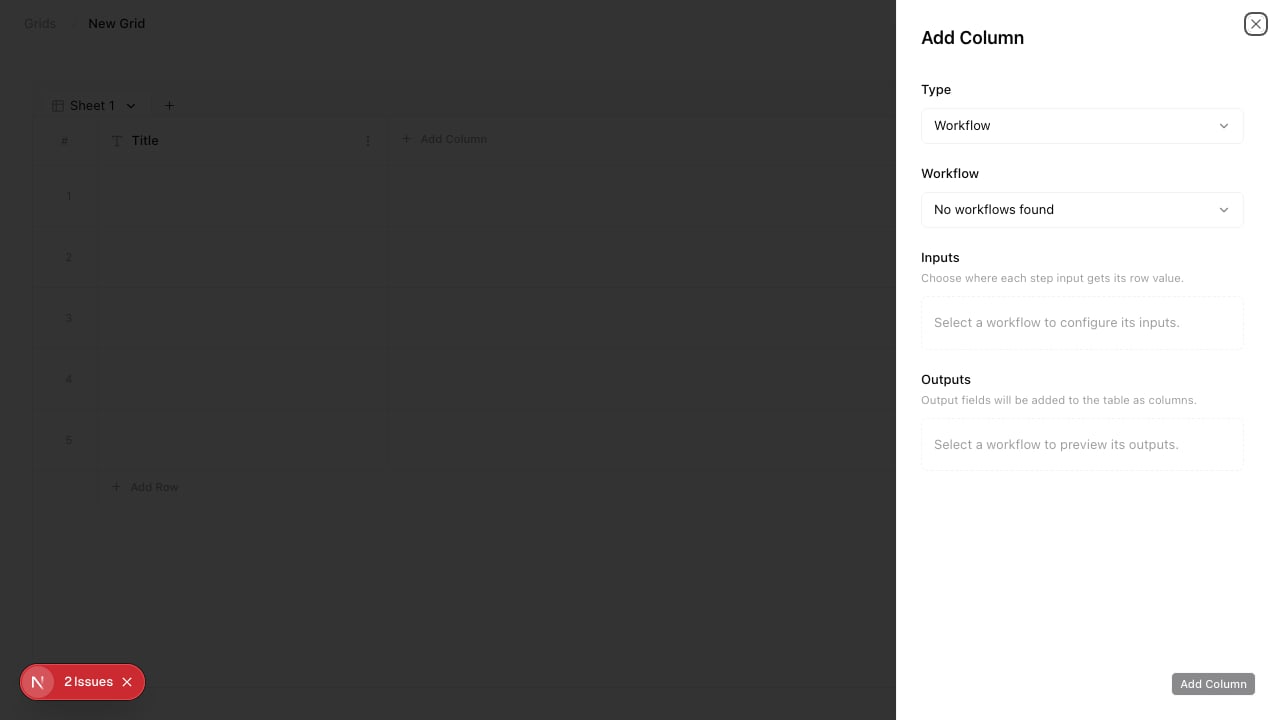
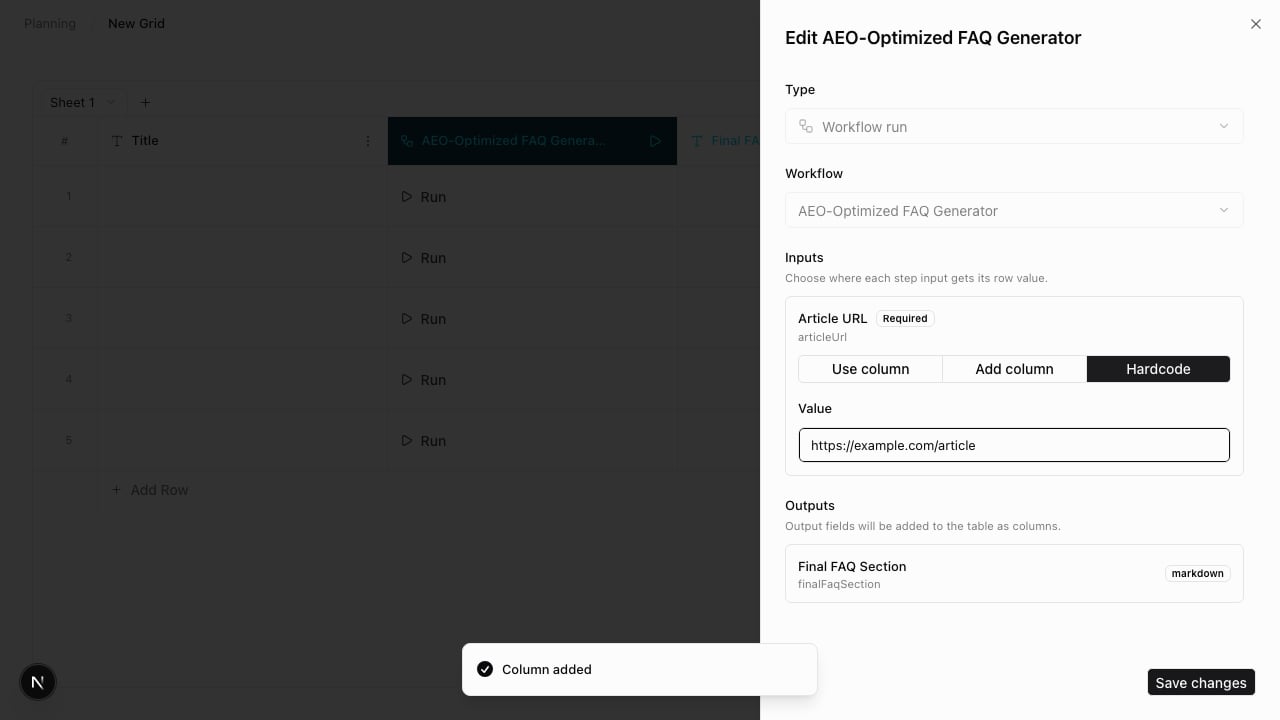
Workflow run, Grids opens a side drawer. Name the column, choose a workflow, then map the workflow inputs to existing columns, new columns, hardcoded values, or empty optional inputs.
To change a workflow column later, open its column header menu and select Edit inputs and outputs. The drawer keeps the selected workflow fixed, shows its current outputs, and lets you remap each input without rebuilding the column.
Enter row values
Click into a cell and type the value. The cell saves when you leave it. UseAdd Row at the bottom of the table when the starter rows are full. Keep one idea, page, keyword, or task per row so sorting stays useful.
Hover over a row number to show row controls. Use the checkbox to select rows. Selected rows show a delete action at the bottom of the workspace. Use the drag handle to reorder rows.
Manage columns
Export a sheet
UseExport CSV to download the active sheet. The export uses the current sheet columns and row order. Values with commas, quotes, or line breaks are escaped for CSV.
Quick routine
- Create a Grid for one list.
- Add the columns needed to review that list.
- Fill the first few rows.
- Sort by priority, date, or another decision column.
- Select and delete rows that no longer belong.
- Export CSV when you need to review or share the active sheet outside Atomic.
- Add a new sheet when the next list needs different columns.
Keep in mind
- Grids are project-level workspaces.
- New Grids and blank sheets start with one
Titlecolumn and five rows. - Google Sheets, CSV, and sitemap imports create a new sheet from the linked, uploaded, or discovered data.
- Keep column names short so the table stays easy to scan.
- Delete removes the selected rows, sheet, or column and its data.