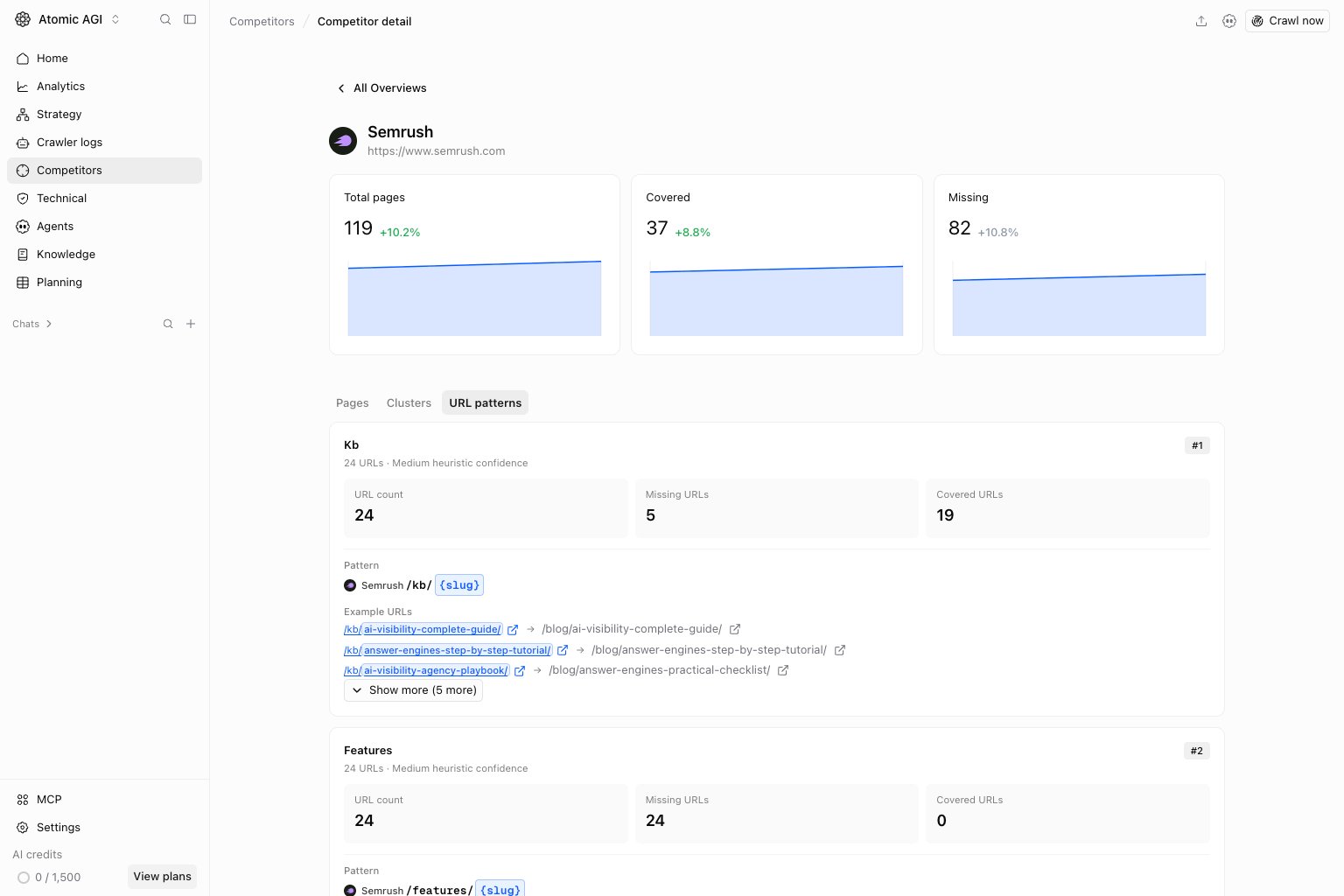

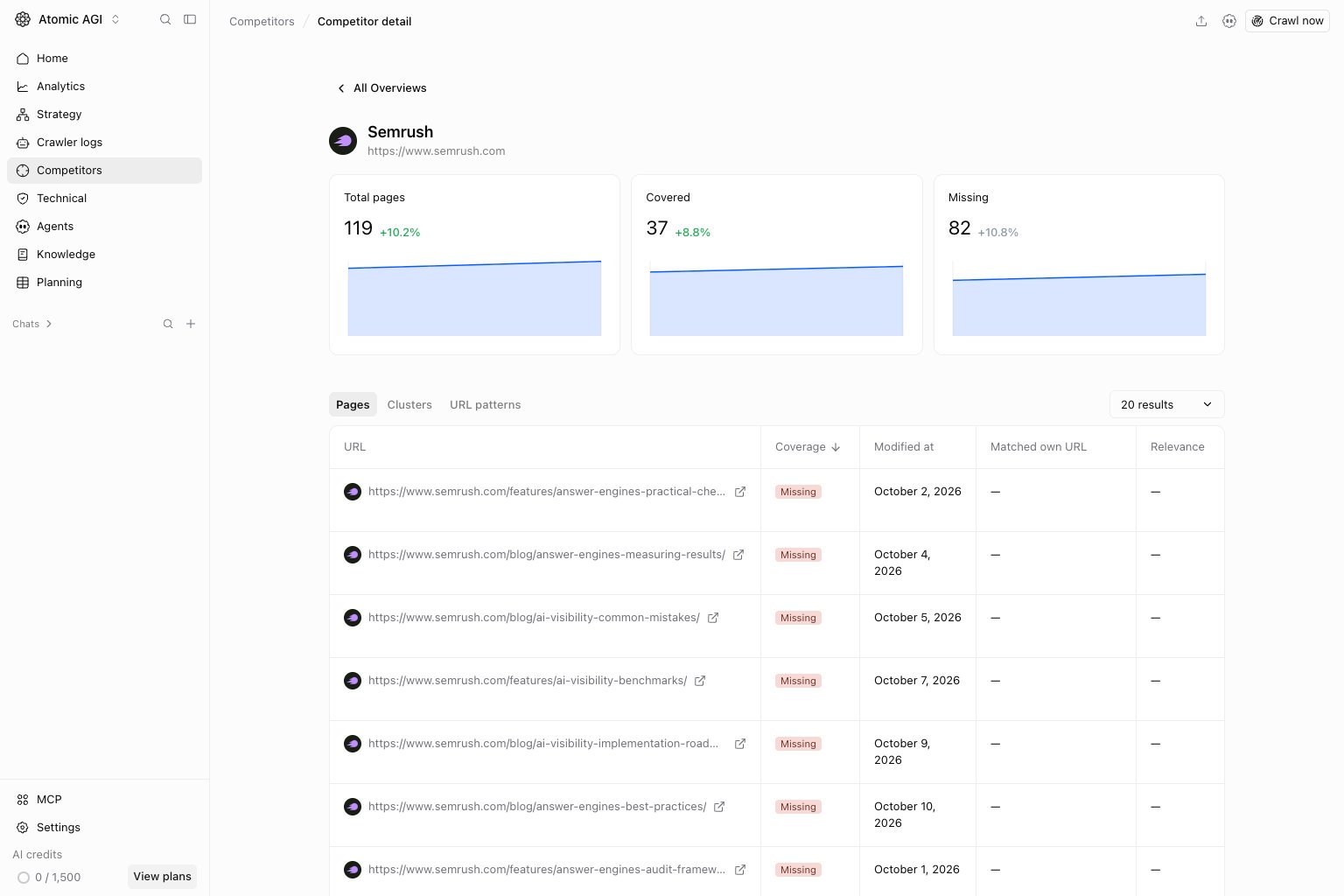
Read coverage summaries
Pages describes the current inventory. Covered and Missing describe classification against your content. Unclassified pages still need evidence; they should not automatically enter the missing-content backlog. Redirects and removed URLs also need different treatment from live content.Understand classifications and confidence
Covered means the comparison has identified owned content covering the competitor page’s intent; Missing means that intent lacks established owned coverage in the available evidence. These page comparisons differ from Strategy’s validated entity and cluster coverage. Unclassified is an unresolved assessment, not a confirmed Missing result. Page category describes a broad content role; page subtype describes its format. Search intent describes the reader’s need, while funnel stage describes its buying-journey role. A cluster groups related topics. Review the source before accepting a surprising label. Classification confidence describes certainty in a field assignment. A low-confidence or unavailable label needs inspection, not a new content ticket. URL-pattern confidence is a separate inventory heuristic: Single URL is one example, Low heuristic has 2–4 URLs, and Medium heuristic has at least 5. A repeated path alone does not establish shared search intent or commercial value.Pages tab
Compare individual URLs, page category/type, intent, cluster, funnel, and coverage where available. Open the page to check its purpose before deciding to create or update content. Use the results-per-page control for a manageable review batch.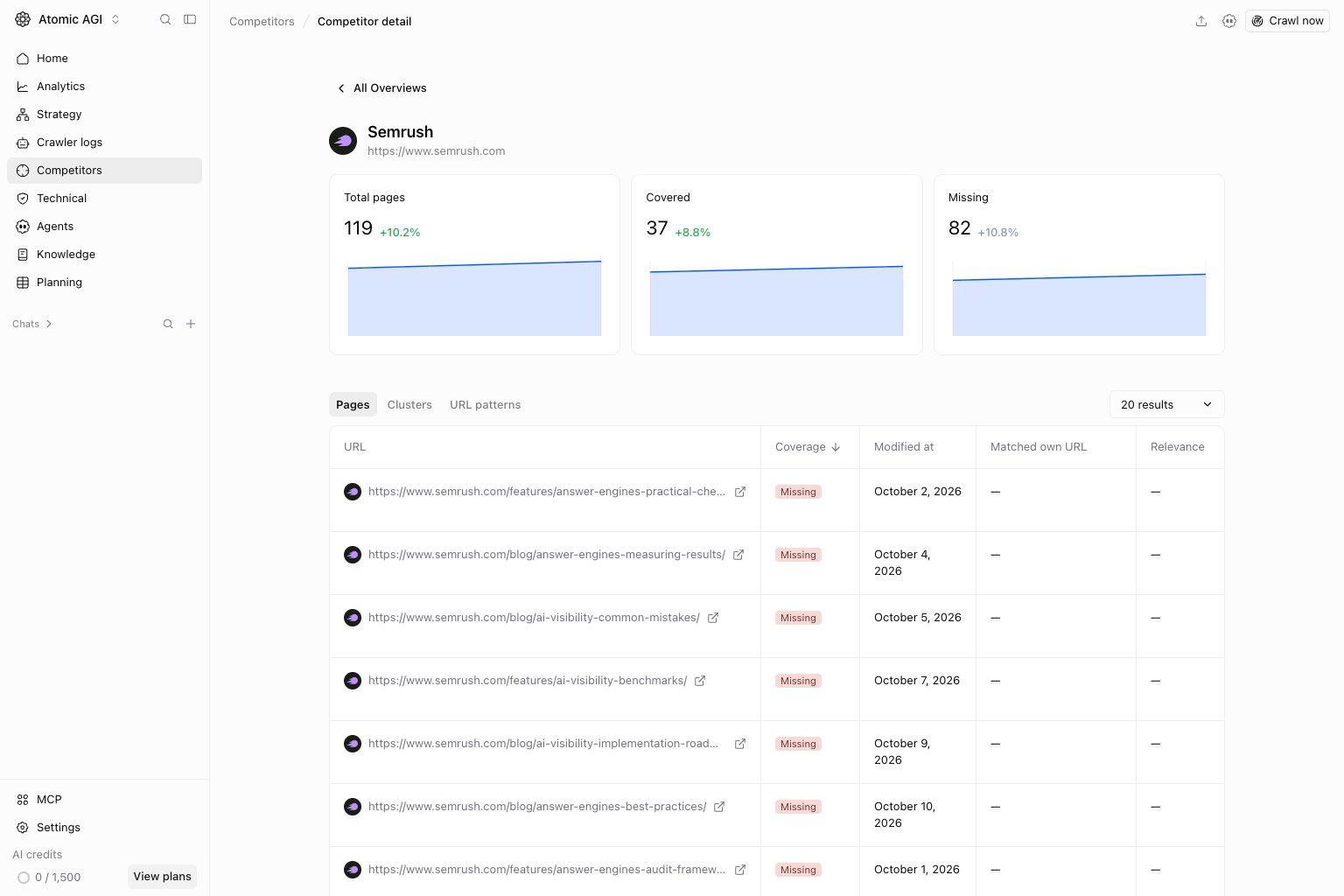
Clusters tab
Group pages by topic to find repeated gaps. Review representative pages and how the cluster supports your audience before adding an entire topic to the plan. Low-confidence classification is a signal to inspect the source.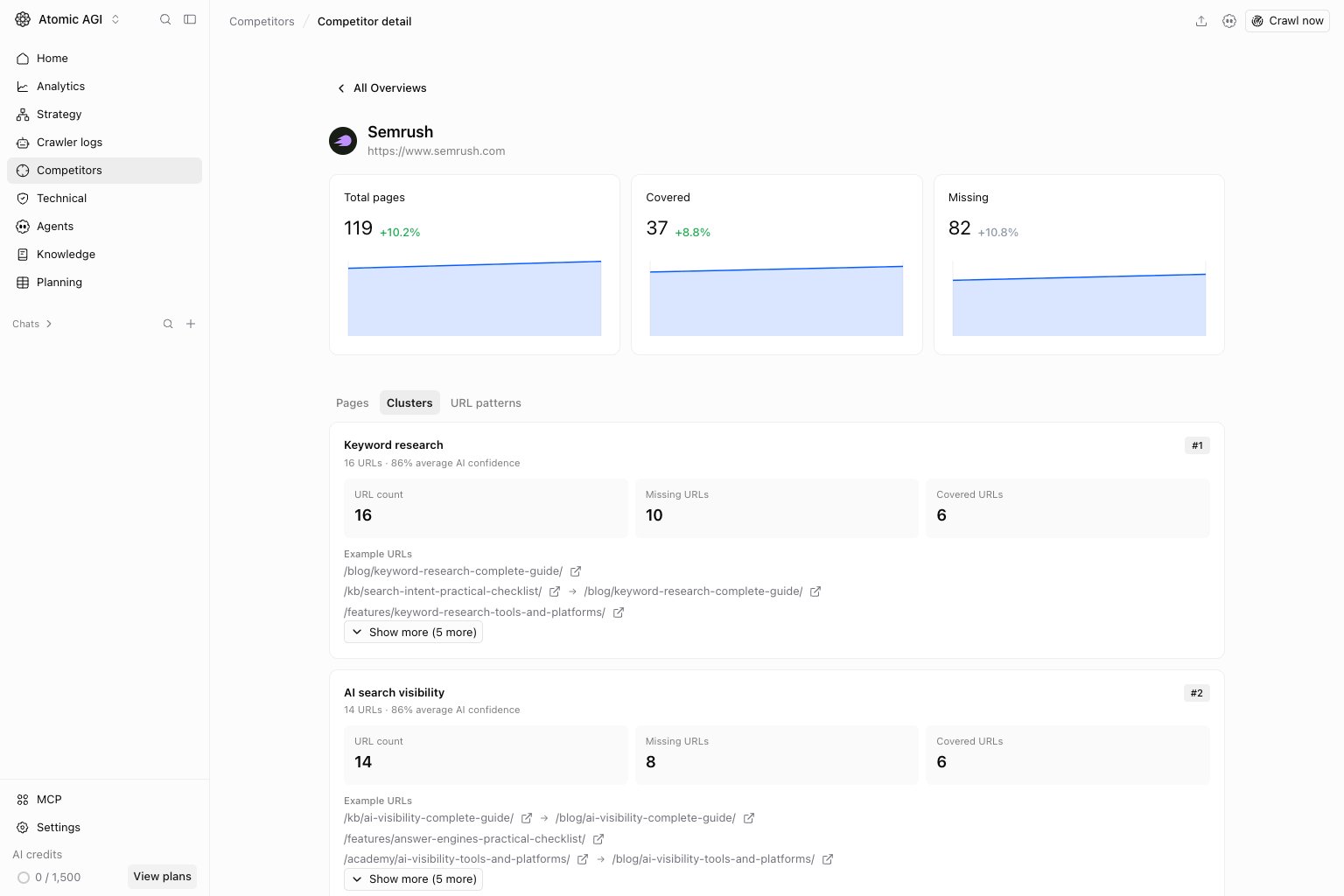
URL patterns tab
Use repeated URL structures to identify possible programmatic content formats. A URL pattern is a heuristic, not proof that all matching pages share a useful content model. Inspect the examples and the confidence label before starting programmatic research.