

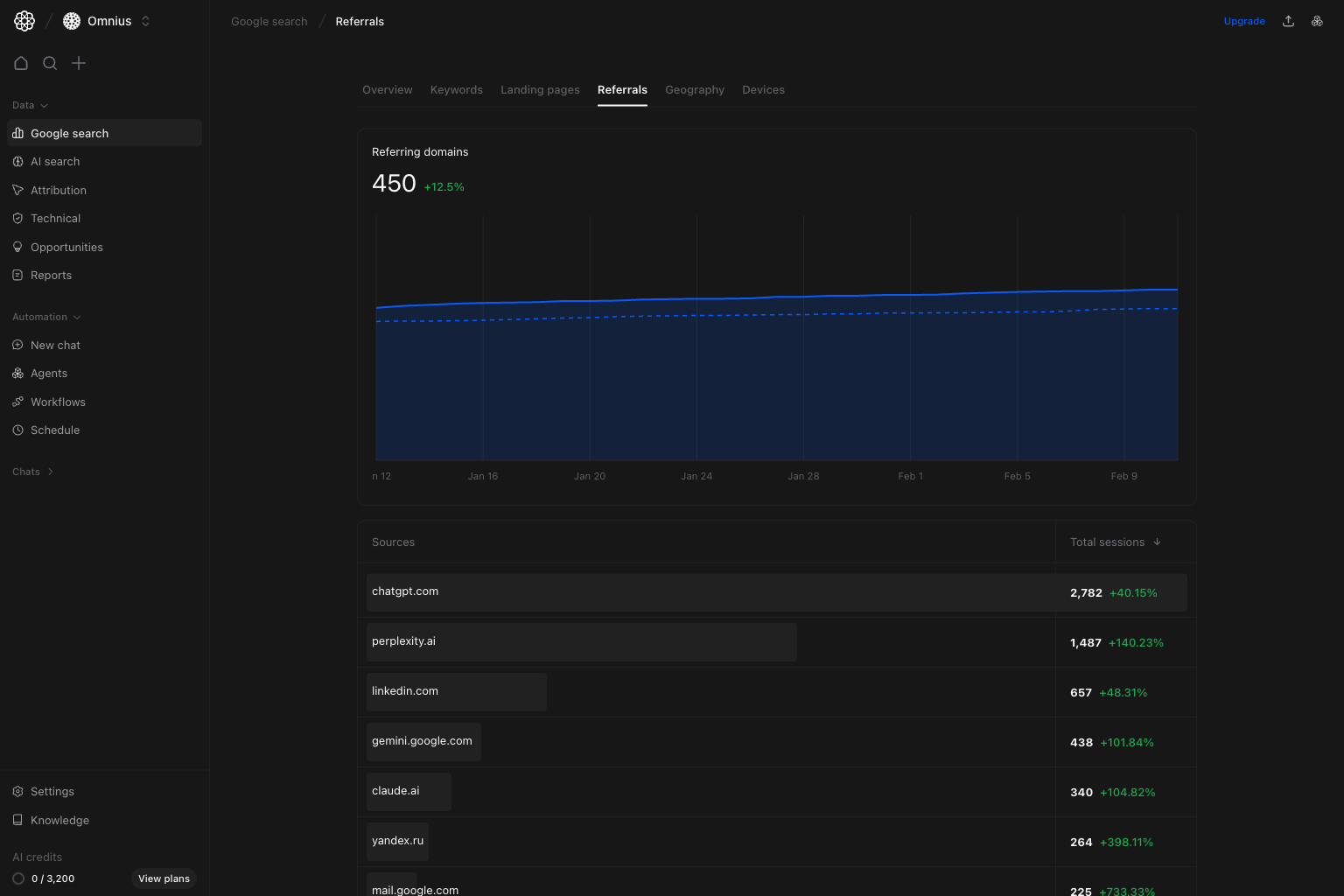
- Which referral domains are growing and sending useful traffic?
- Which sources are declining and need replacement or recovery?
- How should SEO, PR, and distribution priorities change based on source movement?
Important: Referral spikes are not automatically durable channels. Check repeat contribution and source quality before scaling effort.
Before you analyze
- Use a stable comparison window so short-term spikes do not mislead you.
- Start with top sources, then scan mid-tier sources for emerging channels.
- Review both session volume and percentage change before setting priorities.
What this page gives you
The Referrals page combines:- A
Referring domainstrend card to show how your source mix changes over time. - A sources table with
Total sessionsand directional deltas. - Source labels in rows (
new,lost) so you can track churn.
How to read this page correctly
Referring domainsup with flat sessions can mean broader but shallower discovery.- Sessions up from a small set of domains can signal concentration risk.
- High growth percentages on tiny baselines should not outweigh high-volume stable sources.
How these metrics are calculated (simple)
New and lost labels compare source presence against the previous comparison period.
Quick weekly checklist
- Start with domain trend. Confirm whether source footprint is expanding or shrinking.
- Review top-volume sources. Validate if core referrers are stable enough to rely on.
- Scan fast movers. Separate meaningful emerging channels from one-off spikes.
- Inspect
newandlostlabels. Catch partner drop-offs, platform shifts, or campaign changes. - Turn findings into an action list. Assign source-level actions to SEO, content distribution, and partnerships.
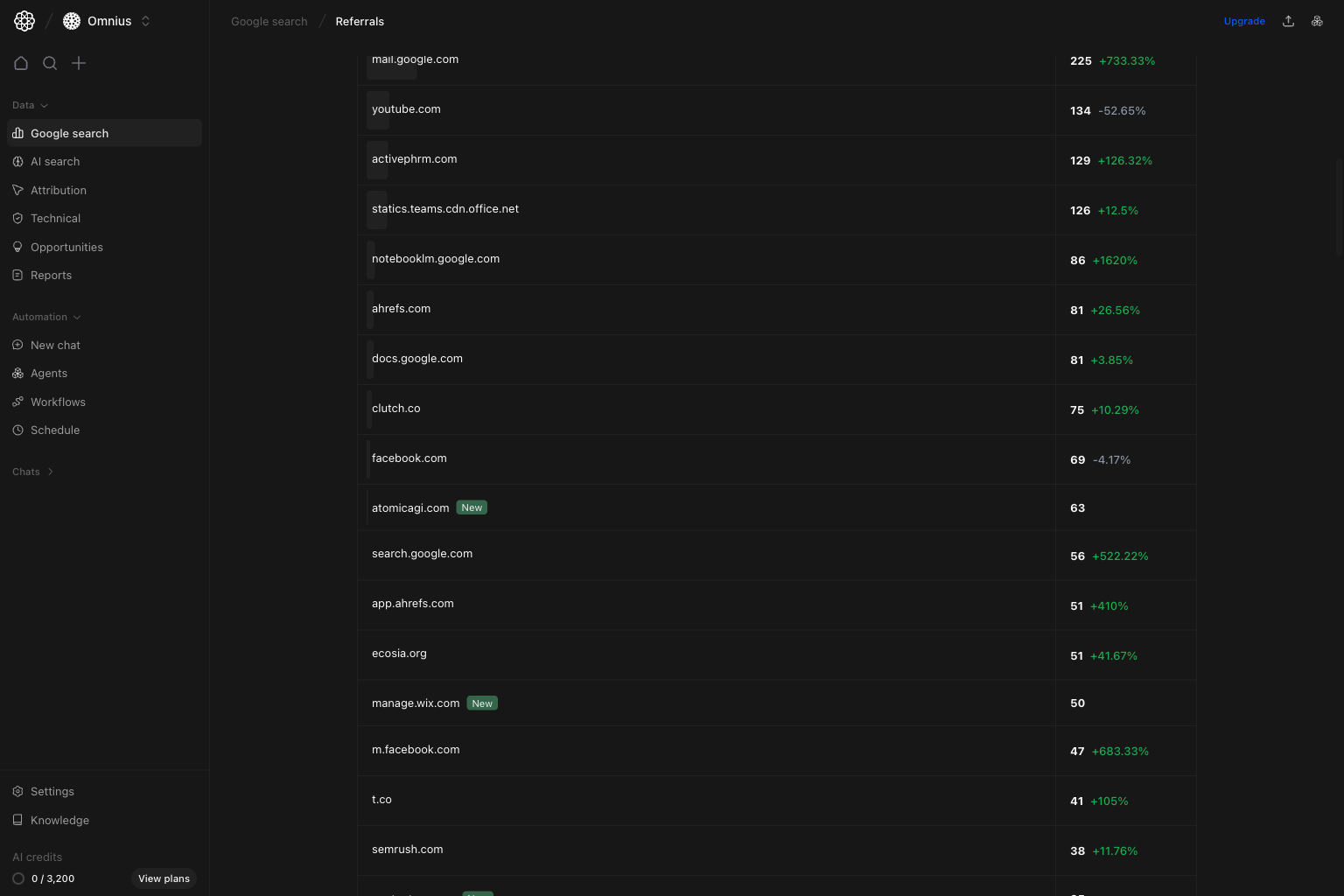
What to fix first
Track new and lost sources
This deeper table view helps you spot source churn that top-level numbers can hide.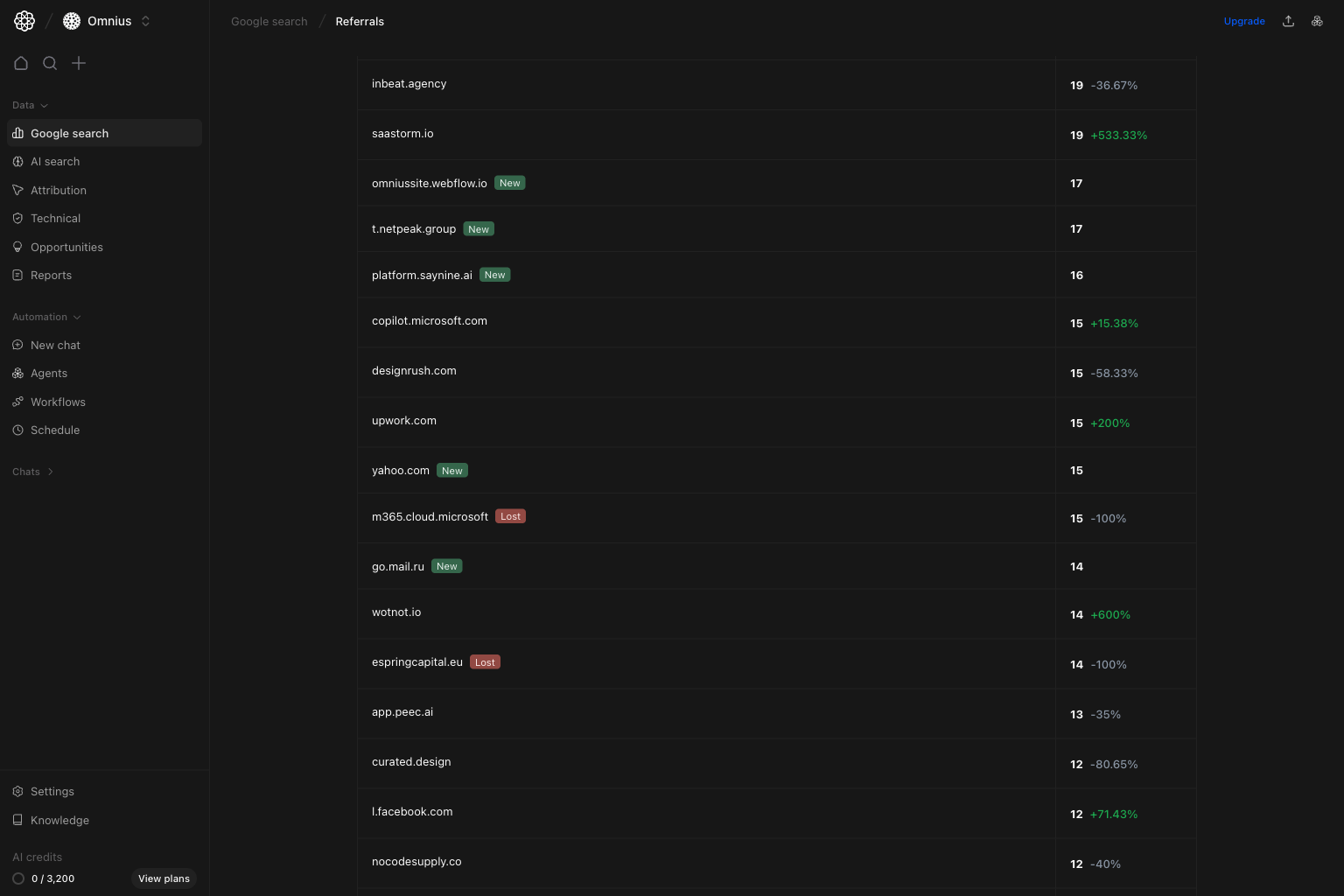
- Rising
newsources with low volume: validate quality before scaling. - Repeated
lostlabels on formerly strong domains: trigger recovery workflow. - Mixed trend (many new + many lost): treat as channel instability, not pure growth.
Team routine
- Weekly: identify top 5 gaining and top 5 declining sources.
- Bi-weekly: map source changes to recent content or campaign launches.
- Monthly: report referral mix, dependency risk, and next channel experiments.
- Quarterly: rebalance channel strategy based on sustained referral contribution.
Keep in mind
- Referral traffic can spike from short-lived mentions; confirm it lasts.
- Percentage growth without baseline context can mislead prioritization.
- Not every referral source matches your target intent; align quality with conversions.
Where to go next
- Google Search overview: top-level organic movement context
- Landing pages: which URLs are benefiting from referral traffic
- Keywords: queries behind the pages that sources amplify
- Geography: market-level differences in referral impact