

Important: A flagged pair is a prioritization signal, not an automatic merge decision.
Questions this page should answer
- Which page pairs overlap too much in intent?
- How severe is the overlap based on similarity and matching signals?
- Which pairs should we merge, re-scope, or relink first?
Before you analyze
- Make sure Project Knowledge is synced recently.
- Start with high-value page types (money pages, category hubs, key guides).
- Review the top summary cards before reading pair-level rows.
What this page gives you
- Summary cards:
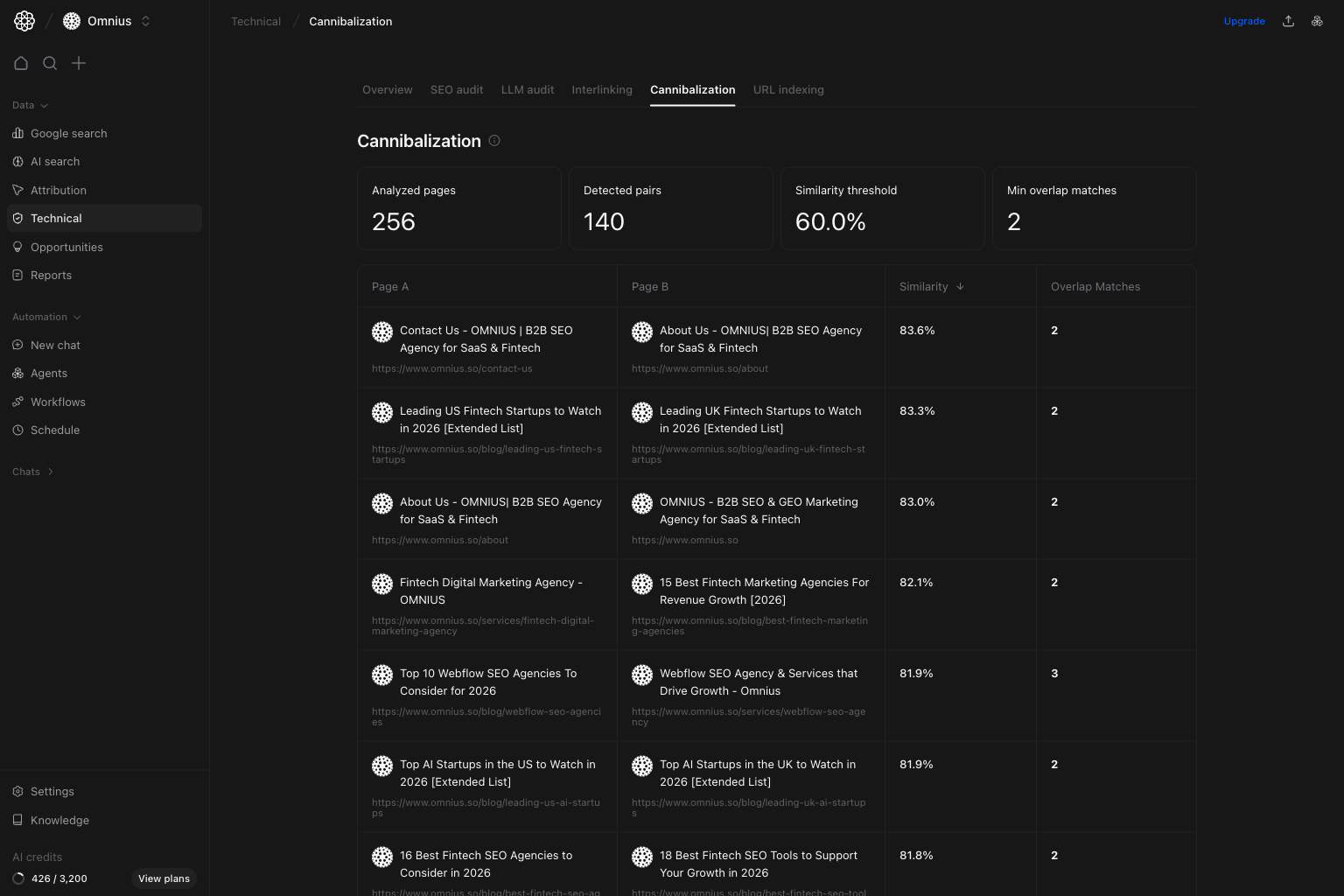
Analyzed pagesDetected pairsSimilarity thresholdMin overlap matches
- Pair table with:
Page APage BSimilarityOverlap Matches
How to read the top cards
Analyzed pages: how many indexed pages were checked.Detected pairs: number of overlapping pairs found.Similarity threshold: minimum assessed cannibalization and same-intent probability required for a pair.Min overlap matches: minimum meaningful shared-query signals required before a pair appears.
- High detected-pair count with stable page volume means structural overlap debt.
- Lower threshold values increase recall but add noisier pairs.
- Higher minimum overlap values reduce noise but can hide borderline conflicts.
How to read the pair table
Page A and Page B are the two pages that may compete for the same intent.
Similarity: assessed cannibalization probability shown as a percentage. It is not a percentage of identical text or a measured ranking loss.Overlap Matches: qualifying shared search queries with weak click-through evidence for both pages, rather than repeated words or matching paragraphs.
- Similarity is high.
- Overlap matches are high.
- Both URLs target high-value funnel stages.
What to do with flagged pairs
Use one of these actions for each pair:- Merge pages when both target the same core intent.
- Split intent clearly by rewriting angle, scope, and title.
- Strengthen canonical internal linking when both pages should exist.
- Update metadata and headings to reduce ambiguity.
Quick weekly checklist
- Review highest-similarity pairs first.
- Decide merge, split, or relink per pair.
- Add implementation tickets with page owners.
- Recheck overlap after updates are published and knowledge is synced.
What to fix first
Team routine
- Weekly: triage new high-risk pairs.
- Bi-weekly: verify shipped fixes reduced overlap.
- Monthly: review recurring conflict clusters and template causes.
Keep in mind
- This view depends on indexed project knowledge quality.
- Not every overlap is harmful if user intent and funnel stage are distinct.
- Fixes should be validated in rankings and conversion behavior, not only similarity scores.